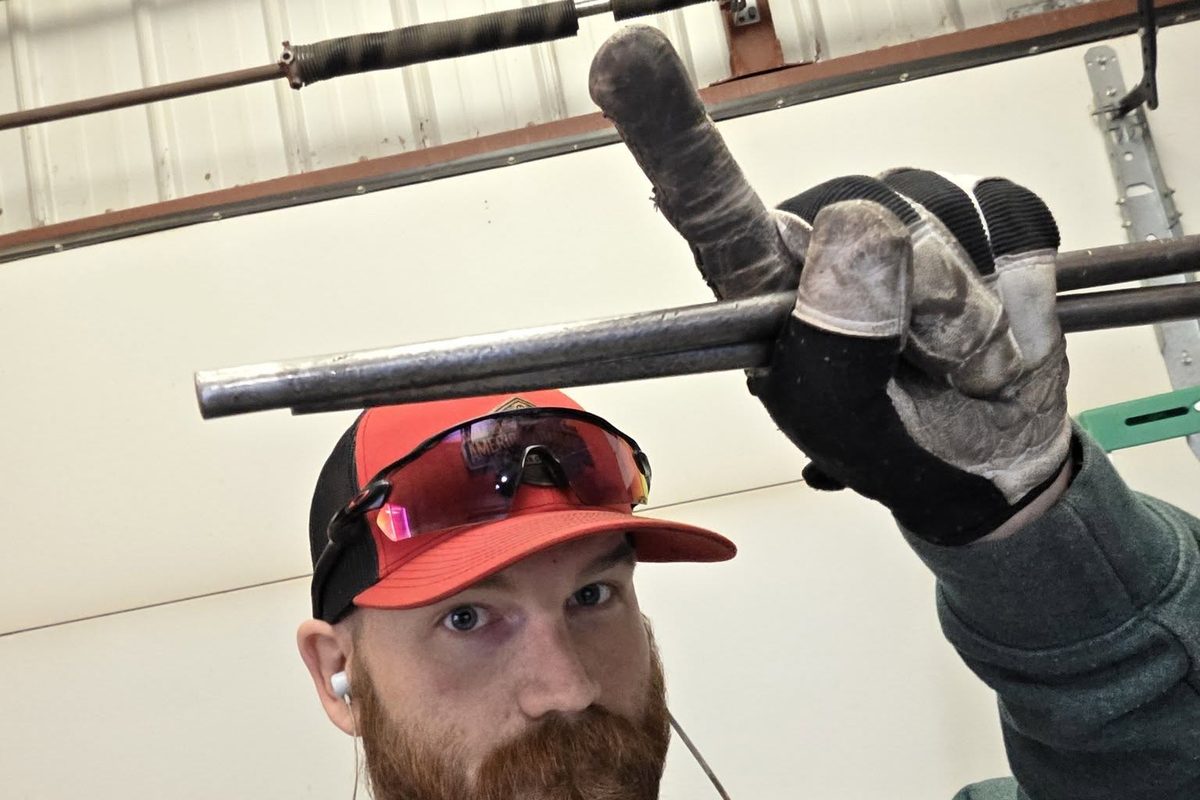
How to Tell the Spring Broke
Most people find out the same way. There's a loud bang from the garage, sometimes in the middle of the night, and the next time they press the button the opener hums, or the door lifts a few inches and stops.
- There's a gap in the coils of the spring above the door, or a stretched or snapped spring along the side tracks.
- The door feels like it weighs a few hundred pounds when you try to lift it by hand.
- The opener runs, but the door barely moves or goes up crooked.
- A cable is hanging loose next to the door.
What to Do Until Zach Gets There
- Stop running the opener. It isn't built to lift the full weight of the door, and forcing it can strip its gear or bend the top section.
- Don't lift the door by hand or prop it open. With a spring broken, the door can drop.
- If your car is stuck inside, mention it. Sometimes it can come out before the repair, sometimes it has to wait.
- Leave the spring and cables alone. They hold enough tension to cause serious injury.
Torsion Springs and Extension Springs
One or two springs on a steel bar right above the door. Most newer Kansas City homes have these, and they're the kind Zach replaces most.
Long springs that run beside the tracks on each side. Common on older and lighter doors. They're replaced in pairs and should have a safety cable through each one.
How Zach Replaces a Spring
He measures the old spring and the door so the new one matches the weight it has to lift. A spring that's too strong or too weak leaves the door hard to balance and wears out the opener. He keeps common sizes on the truck.
Once the new spring is on, he sets the tension, checks the cables and drums, lubricates the moving parts, and runs a balance test and the auto-reverse test before he leaves.
A lot of doors have two torsion springs. If one breaks, the other has been through the same number of cycles and usually isn't far behind. Zach will tell you what he sees and let you decide whether to replace one or both.
How Long Springs Last
Standard springs are commonly rated for about 10,000 open-and-close cycles. A door that runs four times a day uses that up in roughly seven years, and a door used as the main way in and out of the house goes faster. Higher-cycle springs cost more and last longer, which is worth asking about if your door gets heavy use. There's more on this in how long garage door springs last.
Cold snaps tend to finish off springs that were already worn. The winter prep post has a balance test you can do yourself in a couple of minutes.