Signs It's Time
- You can see daylight under the door when it's closed.
- Water runs in under the door when it rains.
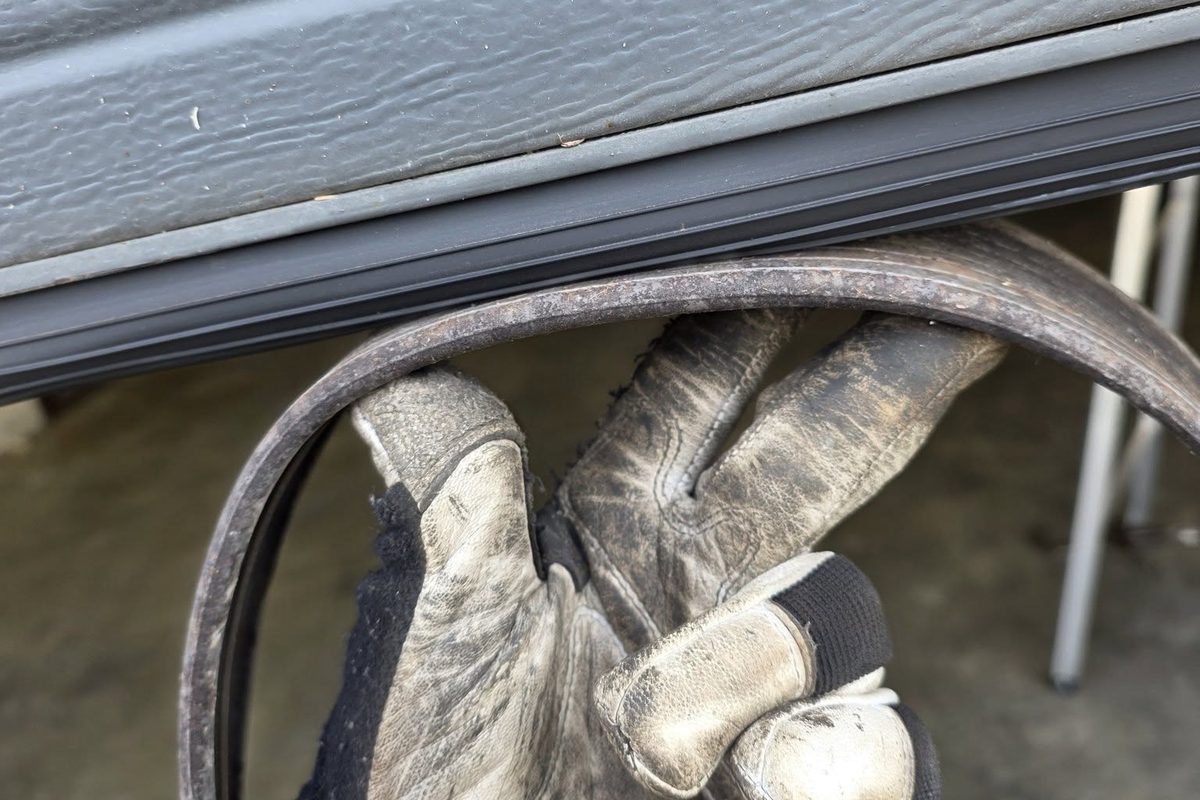
- The rubber is flattened, cracked, torn or missing in spots.
- Leaves, dirt or mice are getting into the garage.
- The door freezes to the concrete in winter.
Why the Right Seal Matters
Bottom seals slide into a metal or vinyl track along the bottom of the door called a retainer. Retainers come in different shapes, and each takes a seal with a matching edge, like T-end, bead-end or J-type. The wrong one won't stay in. Older wood doors often have a seal nailed straight to the bottom instead. Zach matches the seal to your door, and if the retainer itself is bent or rusted out, he replaces that too.
If the floor isn't level, a thicker seal can fill a wider gap on one side. A threshold seal on the floor can also help with water coming in under the door.
The Rest of the Door
The bottom seal handles the bottom of the door. The sides and top are sealed by weatherstripping, and replacing both at once is usually what stops the drafts. If your door freezes down in winter, the winter prep post explains how to free it without hurting the opener.