What Balance Means
The springs are supposed to carry almost all of the door's weight, so the door feels light and the opener only has to guide it. As springs age they lose tension, and the door gets heavier. An out-of-balance door strains the opener, wears the gears and can slam down hard.
The Balance Test
Close the door and pull the red emergency release cord so it's disconnected from the opener. Lift the door by hand to about waist height and let go. A balanced door stays put or drifts slowly. If it drops, shoots up, or is hard to lift, the springs need adjusting or replacing. Close the door all the way and reconnect the opener when you're done.
Signs the Springs Need Adjusting
- The door is heavy to lift by hand.
- It drifts down or creeps up when you let go partway.
- It closes hard, or the opener strains and slows near the top.
- One side sits lower than the other, which can also mean a cable problem.
- A new door or new springs were never quite set right.
Adjust or Replace?
If the springs are in good shape and just a little off, adjusting the tension fixes it. If they're old, rusty or have already been tightened before to make up for wear, adding more turns only buys a short time and puts more strain on worn steel. In that case new springs are the better fix. Zach checks the springs, cables and drums and tells you which one you need.
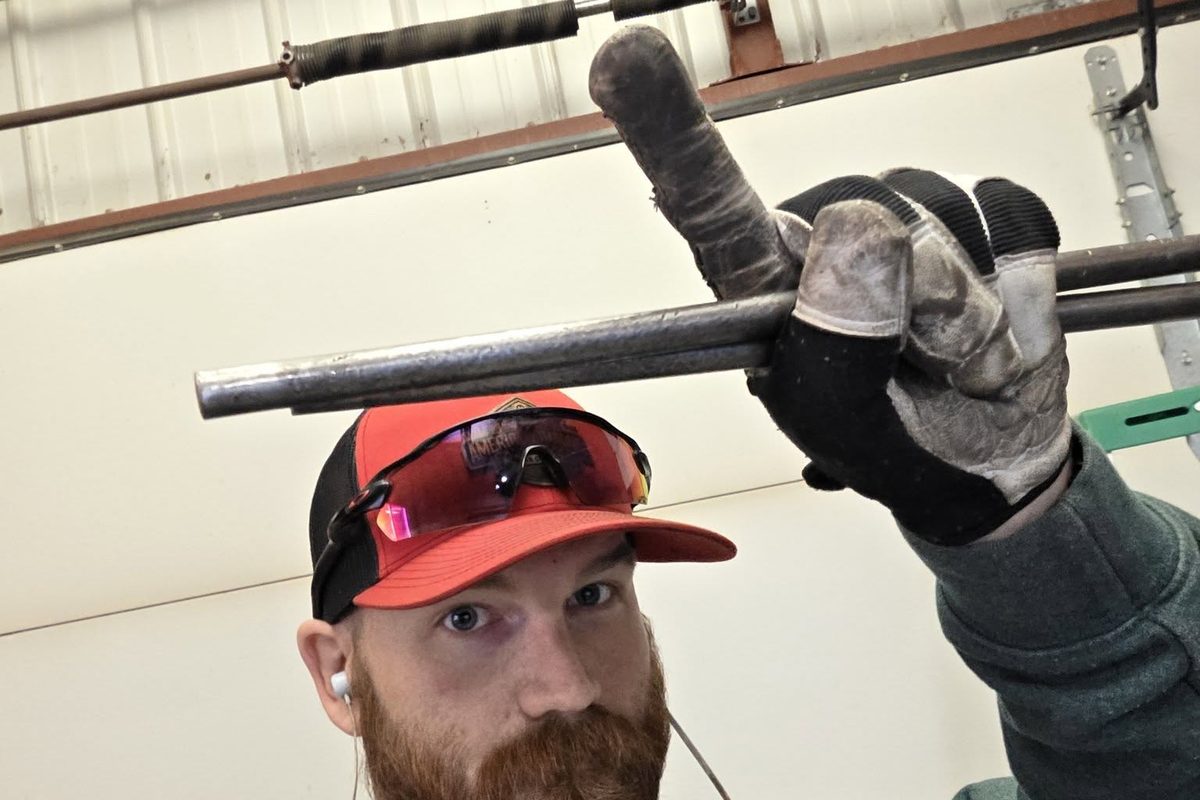
Don't adjust torsion springs yourself. They're wound tight enough to cause serious injury if a bar slips, and doing it safely takes proper winding bars.