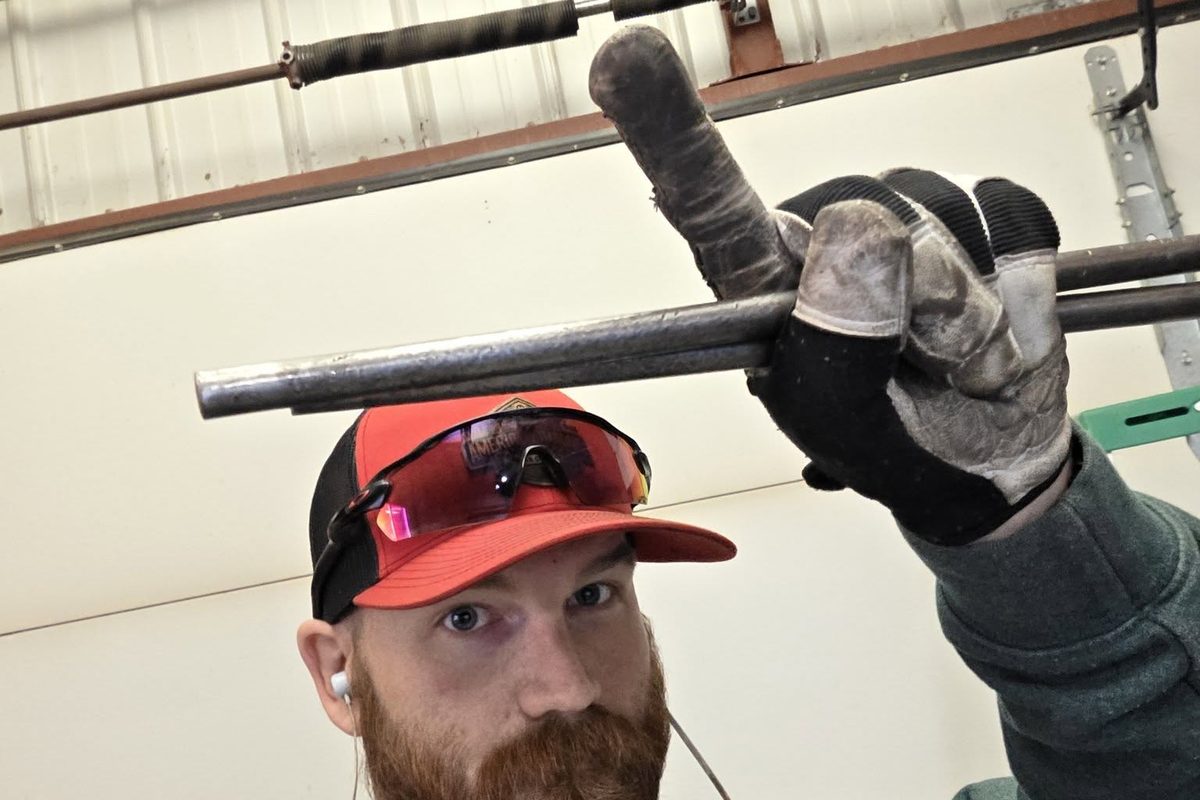
Same-Day Spring Replacement in Kansas City
When a garage door spring breaks, the door becomes too heavy to lift safely - the spring counterbalances the door's weight, and without it, the opener can't lift it. Many homeowners try to force it open, which can damage the opener, bend the door, or - if the spring is still partially under tension - cause serious injury. If the issue turns out to be something other than the springs, Zach handles all types of garage door repair on the same call.
The safe move is to call a professional. Zach Wallace has been replacing garage door springs for 16+ years and carries the right springs for virtually every residential and light commercial door in the KC metro. He'll assess your door, confirm the correct spring specs, replace it, and re-tension the system so everything works exactly as it should.
Torsion Springs vs. Extension Springs
Mounted horizontally above the door opening. Most modern residential doors use a single or double torsion spring system. More durable and precise than extension springs.
Run along the horizontal tracks on each side of the door. Found on older and lighter residential doors. Replaced in pairs for balanced operation.
Most spring replacements are completed same-day. Zach carries common spring sizes on his truck so there's no waiting for parts.
Springs are under enormous tension. DIY spring replacement is dangerous. Zach handles the job with the proper tools and 16+ years of experience.
Spring weight must match the door. The wrong spring stresses the opener and causes premature failure. Zach measures and specs it correctly.
After replacing the spring, Zach checks cables, rollers, and balance to make sure everything works properly.
Should You Replace One or Both Springs?
If your door has two torsion springs and one breaks, the other is likely near the end of its life as well. Replacing both at the same time costs less than two separate service calls and ensures balanced operation. Zach will give you an honest recommendation based on the condition of your springs - not a hard sell.